.svg)


Selective Pallet Racking Systems vs Push-Back Pallet Racking: Comprehensive Comparison for Optimal Warehouse Storage Solutions
In the realm of warehouse storage solutions, the choice between selective pallet racking systems and push-back pallet racking can significantly impact efficiency and accessibility. Selective pallet racking offers direct access to each pallet, making it a flexible option for diverse inventory management needs. On the other hand, push-back pallet racking maximizes storage density by utilizing a last-in-first-out (LIFO) system, which can be particularly advantageous for high-volume operations. This article will delve into the mechanisms, advantages, and comparisons of these two systems, providing insights into their respective benefits and applications in modern warehousing. We will explore key aspects such as accessibility, cost factors, and safety compliance, ensuring a comprehensive understanding of how each system can optimize warehouse operations.
What Are Selective and Push-Back Pallet Racking Systems?
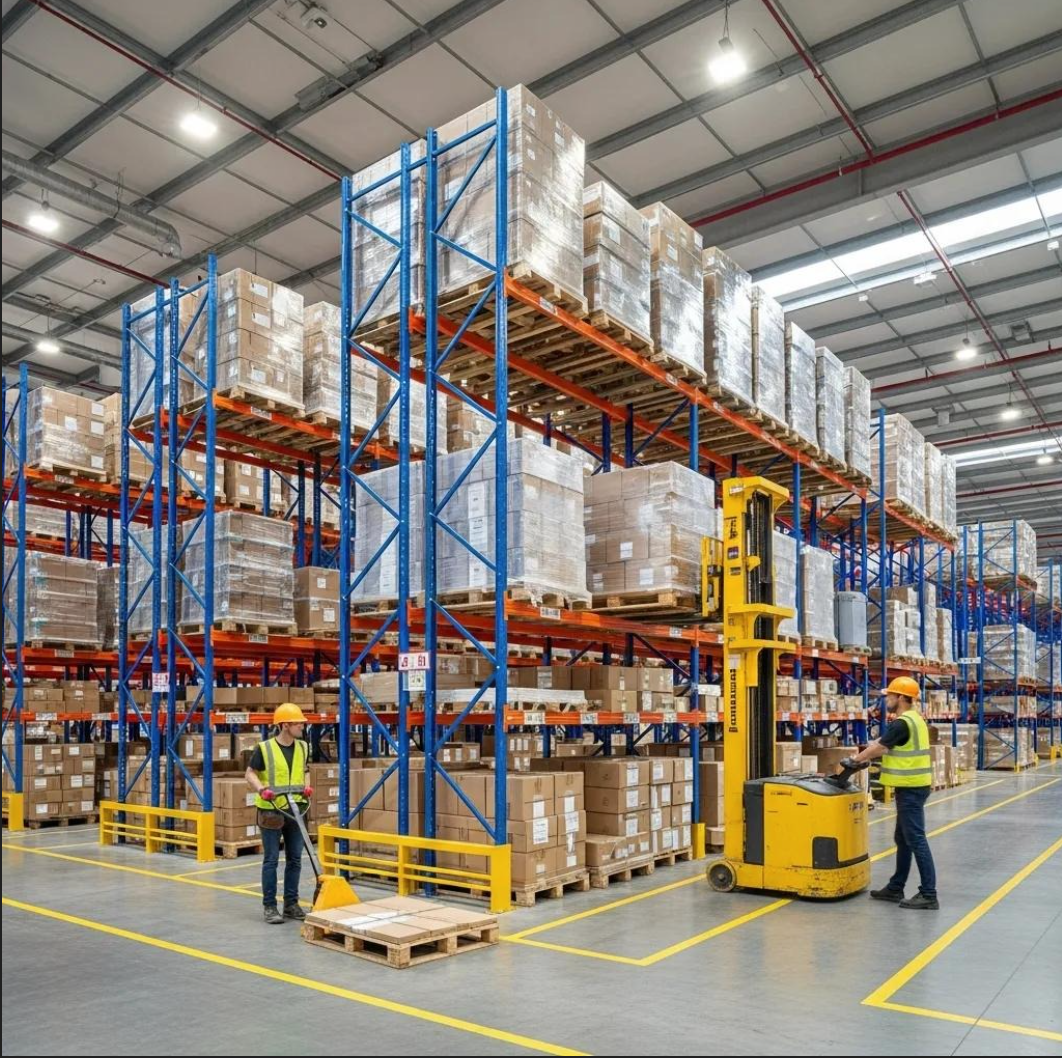
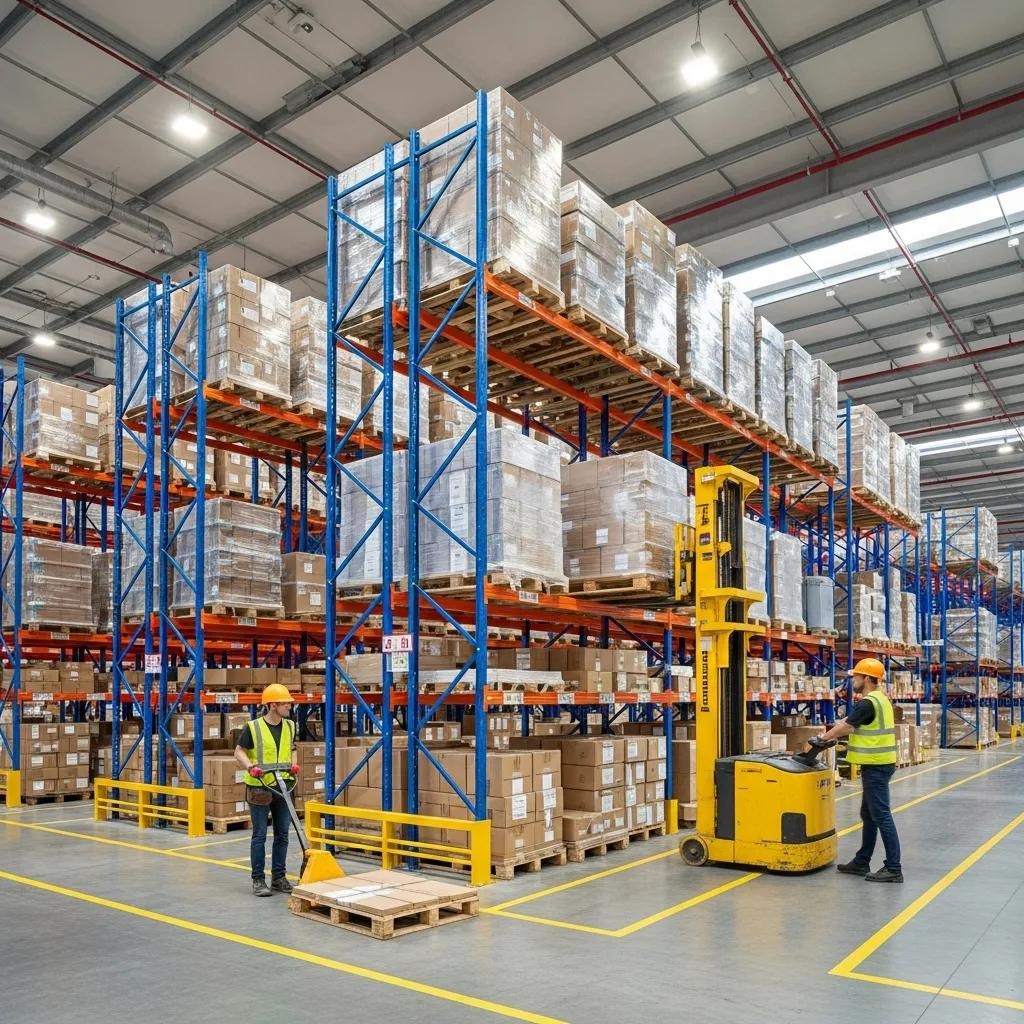
Selective pallet racking systems are designed to provide direct access to each pallet stored within the racking structure. This system allows for easy inventory management and quick retrieval of products, making it ideal for warehouses with a wide variety of items. The mechanism operates through upright frames and horizontal beams, which support pallets at various heights, enabling efficient use of vertical space.
How Does Selective Pallet Racking Provide Direct Pallet Access?
Selective pallet racking enhances warehouse efficiency by allowing direct access to every pallet. This feature is particularly beneficial in environments where inventory turnover is high, as it facilitates quick loading and unloading. For instance, warehouses that handle multiple SKUs can benefit from the flexibility of selective racking, as it allows for easy rearrangement of products based on demand.
What Mechanisms Enable Push-Back Pallet Racking's High-Density Storage?
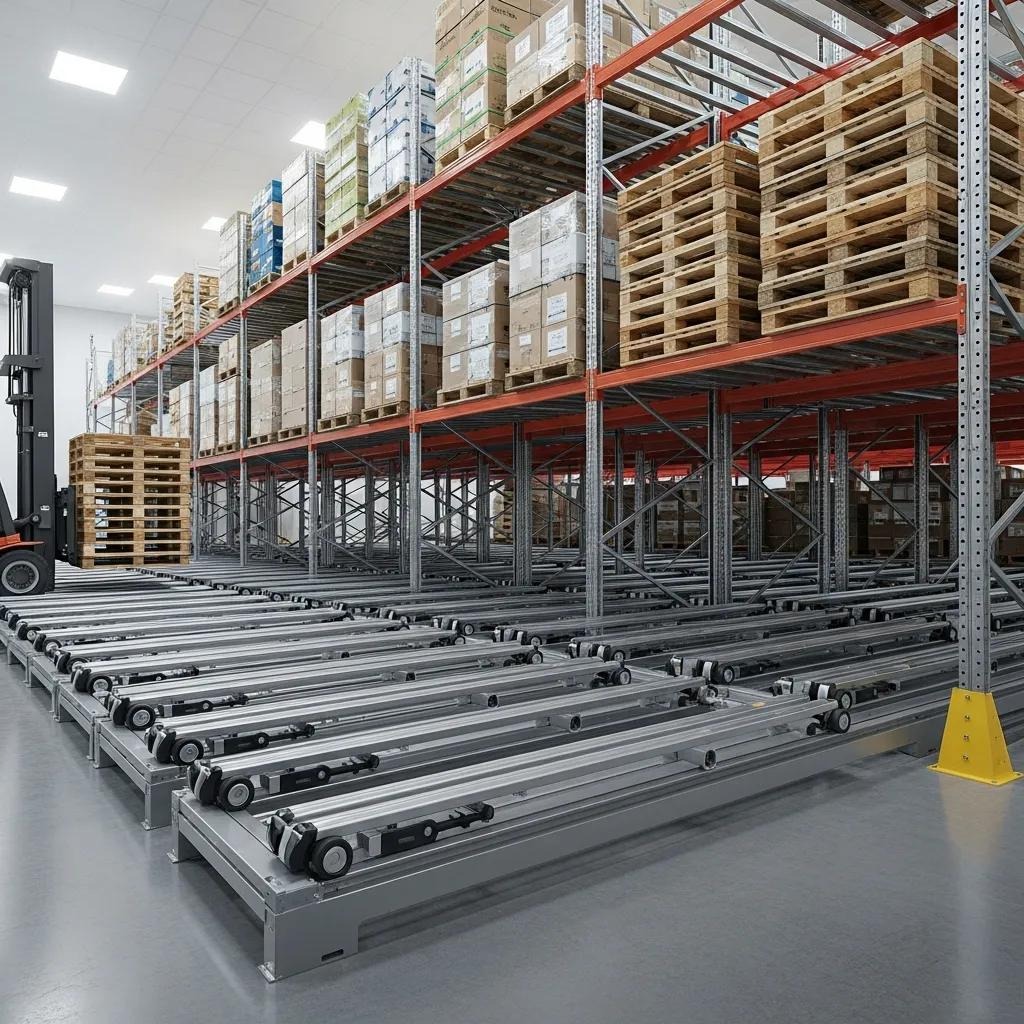
Push-back pallet racking operates on a different principle, utilizing a system of carts that move along inclined rails. This design allows pallets to be stored in a compact manner, maximizing the use of available space. The last-in-first-out (LIFO) storage method means that the most recently added pallets are the first to be retrieved, which can streamline operations in certain inventory scenarios. This system is particularly effective for warehouses that manage large quantities of similar products, as it optimizes storage density without sacrificing accessibility.
What Are the Key Advantages of Selective Pallet Racking?
Selective pallet racking offers several key advantages that make it a popular choice among warehouse managers. Its design promotes accessibility and flexibility, allowing for efficient inventory management and quick retrieval of products.
How Does Selective Racking Enhance Warehouse Accessibility and Flexibility?
One of the primary benefits of selective racking is its ability to enhance accessibility. With direct access to each pallet, warehouse staff can quickly locate and retrieve items, reducing the time spent on order fulfillment. Additionally, the flexibility of this system allows for easy adjustments to accommodate changing inventory needs, making it suitable for businesses with fluctuating stock levels.
What Cost Factors Influence Selective Pallet Racking Implementation?
When considering selective pallet racking, several cost factors come into play. Initial investment costs can vary based on the size and configuration of the racking system, as well as installation expenses. However, the long-term savings associated with improved efficiency and reduced labor costs often justify the initial expenditure. Businesses should also consider the potential for increased sales due to faster order processing times.
What Are the Benefits of Push-Back Pallet Racking for Warehouse Efficiency?
Push-back pallet racking provides distinct advantages that can significantly enhance warehouse efficiency. By maximizing storage density, this system allows for more products to be stored in a smaller footprint, which can lead to cost savings on real estate and operational expenses.
How Does Push-Back Racking Maximize Storage Density and Space Utilization?
The design of push-back racking enables high-density storage by allowing pallets to be stored multiple positions deep on carts that move along inclined rails. This system utilizes the depth of the racking structure, enabling warehouses to store more products without expanding their physical footprint. As a result, businesses can optimize their space utilization, leading to lower overhead costs and improved operational efficiency.
What Are the Operational Advantages of Last-In-First-Out Storage in Push-Back Systems?
The last-in-first-out (LIFO) storage method employed by push-back racking systems offers operational advantages, particularly for non-perishable goods or items with a stable shelf life. This approach ensures that the most recently stored pallets are accessed first, which can be beneficial in certain inventory management scenarios. However, for perishable goods, a first-in-first-out (FIFO) system is generally preferred to reduce the risk of obsolescence and waste. Additionally, the streamlined retrieval process can enhance inventory turnover rates, contributing to overall warehouse efficiency.
How Do Selective and Push-Back Pallet Racking Systems Compare?
When comparing selective and push-back pallet racking systems, several factors come into play, including storage capacity, accessibility, installation complexity, and maintenance requirements.
What Are the Differences in Storage Capacity and Accessibility Between the Two Systems?
Selective pallet racking provides direct access to each pallet, making it ideal for warehouses with diverse inventories. In contrast, push-back racking maximizes storage capacity by allowing pallets to be stored multiple positions deep on carts, increasing storage density. While selective racking offers superior accessibility, push-back systems excel in high-density storage scenarios, making the choice largely dependent on the specific needs of the warehouse.
How Do Installation Complexity and Maintenance Requirements Differ?
Installation complexity can vary between the two systems. Selective racking is generally easier to install due to its straightforward design, while push-back racking may require more intricate setup due to its moving components. Maintenance requirements also differ, with selective racking typically needing less frequent upkeep compared to push-back systems, which may require regular checks on the cart and rail mechanisms to ensure smooth operation.
What Safety and Compliance Standards Apply to Pallet Racking Systems?
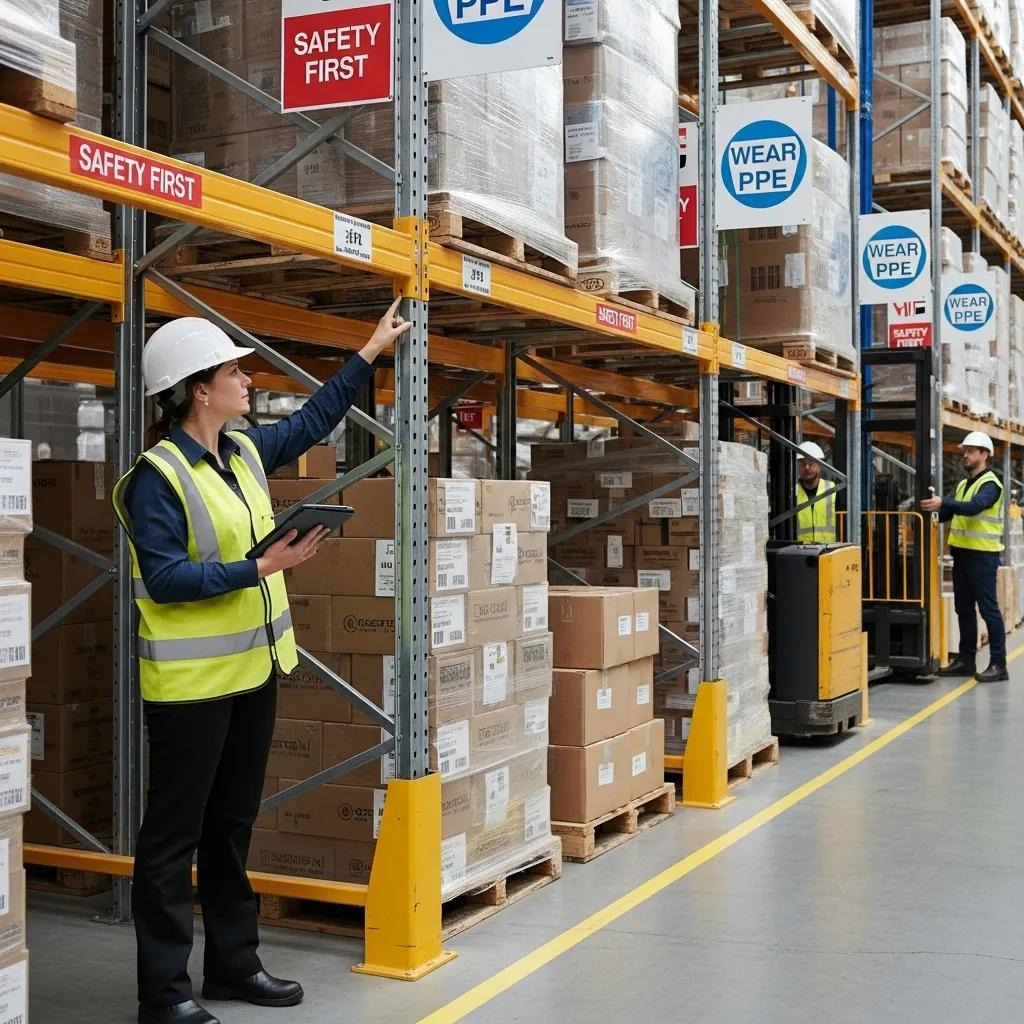
Safety and compliance are critical considerations when implementing pallet racking systems. Both selective and push-back racking must adhere to industry standards to ensure safe operation and minimize risks.
Which OSHA and ANSI Guidelines Are Relevant for Selective and Push-Back Racking?
The Occupational Safety and Health Administration (OSHA) and the American National Standards Institute (ANSI) provide guidelines that govern the safe use of pallet racking systems. These standards cover aspects such as load capacity, installation practices, and maintenance protocols, ensuring that warehouses operate within safe parameters. Relevant standards include OSHA 1910.176 and ANSI MH16.1, which address material handling and storage equipment safety.
How Can Warehouses Ensure Safety Compliance During Installation and Use?
To ensure safety compliance, warehouses should conduct regular inspections of their racking systems and provide training for staff on proper loading and unloading procedures. Implementing a safety checklist during installation can also help identify potential hazards and ensure adherence to OSHA and ANSI guidelines.
What Emerging Trends Are Shaping the Future of Pallet Racking Systems?
As technology continues to evolve, several emerging trends are shaping the future of pallet racking systems. Innovations in automation and IoT integration are enhancing the efficiency and effectiveness of warehouse operations.
How Are Automation and IoT Integration Enhancing Pallet Racking Efficiency?
Automation technologies, such as automated guided vehicles (AGVs) and robotic picking systems, are increasingly being integrated with pallet racking systems. This integration allows for faster and more accurate inventory management, reducing labor costs and improving overall efficiency. Additionally, IoT devices can provide real-time data on inventory levels and racking conditions, enabling proactive management and maintenance.
What Are the Latest Industry Insights on High-Density Storage Solutions for 2026?
Looking ahead to 2026, industry experts predict a continued focus on high-density storage solutions that maximize space utilization while maintaining accessibility. As businesses seek to optimize their operations, the demand for innovative racking systems that combine efficiency with safety will likely drive advancements in design and technology.