.svg)


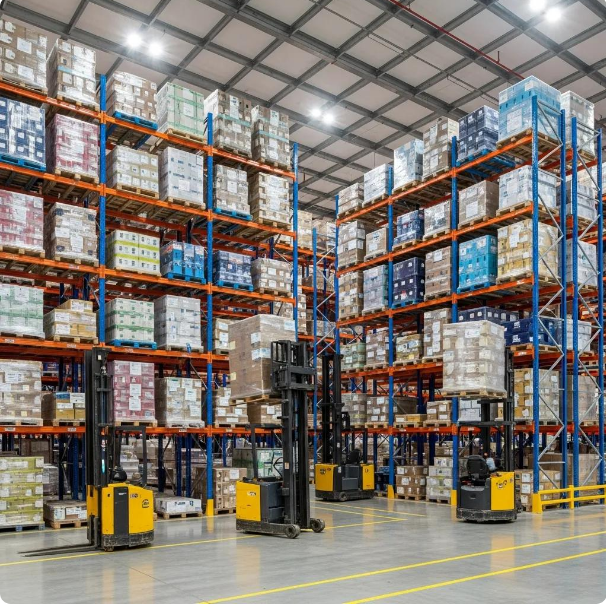
Choosing the right racking system directly affects how efficiently your warehouse runs and how much product you can store. This guide compares selective pallet racking and drive-in racking, outlining how each system works, where they perform best, and the trade-offs to expect. Many operations struggle to balance storage density with easy access. Understanding these two approaches helps you make a practical decision that improves throughput, reduces handling time, and fits your inventory strategy. We'll dive into selective racking features, drive-in characteristics, a side-by-side comparison, selection criteria, and Skyteck Online's expert recommendations.
What Are Selective Pallet Racking Systems and Their Key Features?
Selective pallet racking gives operators direct access to every pallet. Built from vertical uprights and adjustable beams, it lets you reconfigure bay heights and lane widths to match changing pallet sizes. The core benefit is accessibility: you can retrieve any pallet without moving others, which speeds picking and simplifies inventory control. That makes selective racking a strong choice for a mix of different products and fast-moving goods.
How Does Selective Pallet Racking Provide 100% Direct Pallet Access?
The open aisle design and per-pallet beam levels let forklifts reach any pallet independently. Because each pallet sits on its own load beam, you never need to shuffle stock to access a single pallet. This straightforward access reduces pick and restock time, makes handling less complex, and supports clearer inventory tracking.
What Are the Advantages and Limitations of Selective Racking for Warehouse Operations?
Selective racking offers several advantages, including:
- Flexibility: Adjustable beams and frames make reconfiguration quick as products or pallet sizes change.
- Accessibility: Direct access to every pallet cuts down on retrieval time and simplifies picking workflows.
- Inventory Control: Clear locations and easy access reduce picking errors and speeds up audits.
However, there are limitations to consider:
- Lower Storage Density: More aisle space is required, so you get fewer pallet spots per square metre than high-density systems.
- Moderate Initial Costs: The bits and pieces, plus getting it all set up, are pretty standard in cost compared with other racking types.
- Space Requirements: Wider aisles mean fewer pallet spots overall in the same amount of space.
What Defines Drive-In Racking Systems and Their Operational Characteristics?
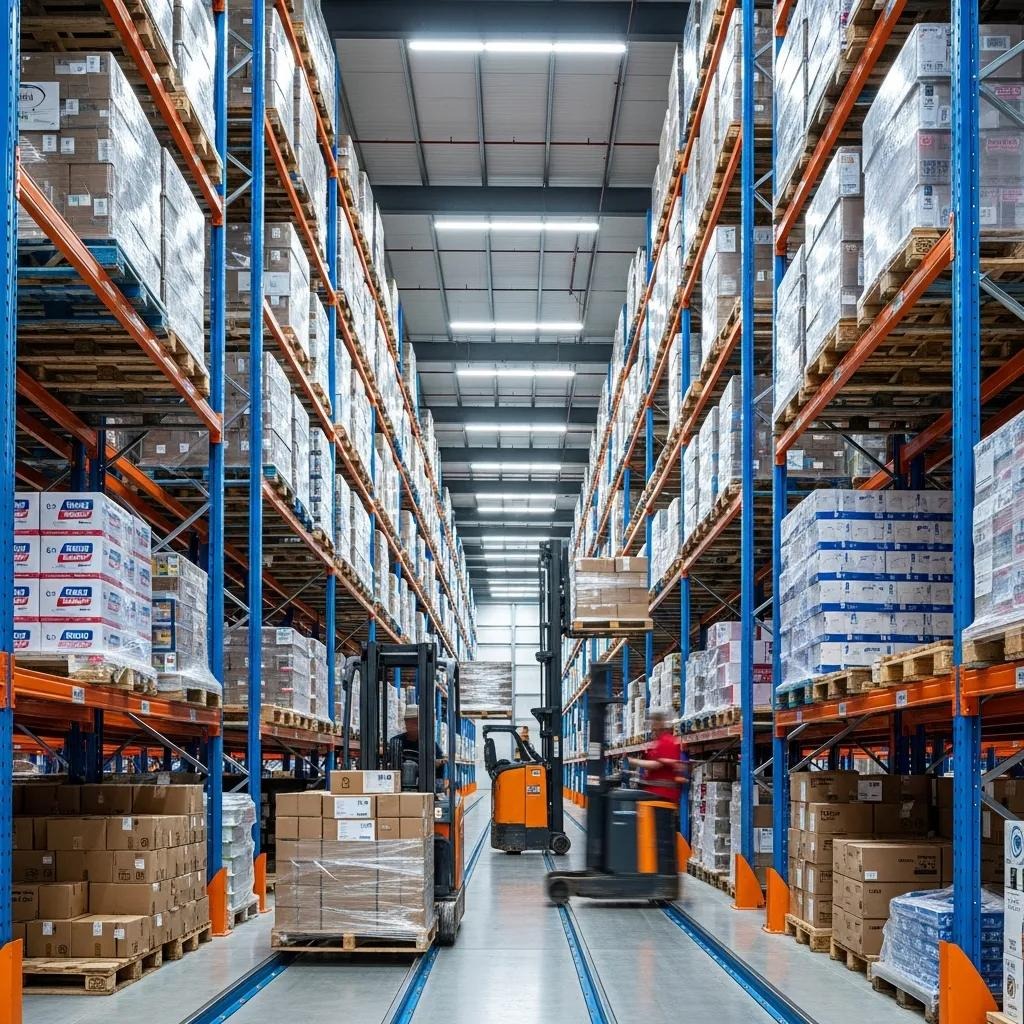
Drive-in racking is built to maximise storage density by letting forklifts drive directly into the rack lanes. It operates on a Last-In, First-Out (LIFO) principle: the last pallet stored is the first retrieved. This approach is best for big batches of the same product, where getting the most pallet spots into every square metre matters more than individual pallet accessibility.
How Does Drive-In Racking Maximise Storage Density with LIFO Inventory Management?
Drive-in systems reduce the number of aisles by stacking pallets deep on rails or guides inside the structure, so multiple pallets sit in a single lane. By reducing travel and aisle area, you can fit a lot more pallets into the same area. LIFO works well where product rotation and shelf life allow the most recently stored pallets to be picked first.
What Are the Pros and Cons of Drive-In Racking in Bulk Storage Environments?
Drive-in racking systems present several advantages:
- Maximised Storage Density: Deep lanes and fewer aisles let you cram a heap more pallets into the same footprint.
- Cost-Effective for Bulk: Brilliant for big stacks of the same product, reducing the need for multiple racking types.
- Simplified Rotation for Long-Life Products: LIFO makes rotating stock a breeze when shelf life and picking patterns are compatible.
However, there are also disadvantages:
- Limited Accessibility: Pallets stored deep mean you have to shift the front pallets to get to the ones at the back, increasing handling steps.
- Higher Risk of Damage: Forklifts operating inside the rack can ding up the rails or pallets if not managed carefully.
- Poor Fit for Diverse Inventory: Not ideal when you need frequent access to lots of different products.
How Do Selective and Drive-In Racking Systems Compare Across Critical Warehouse Metrics?
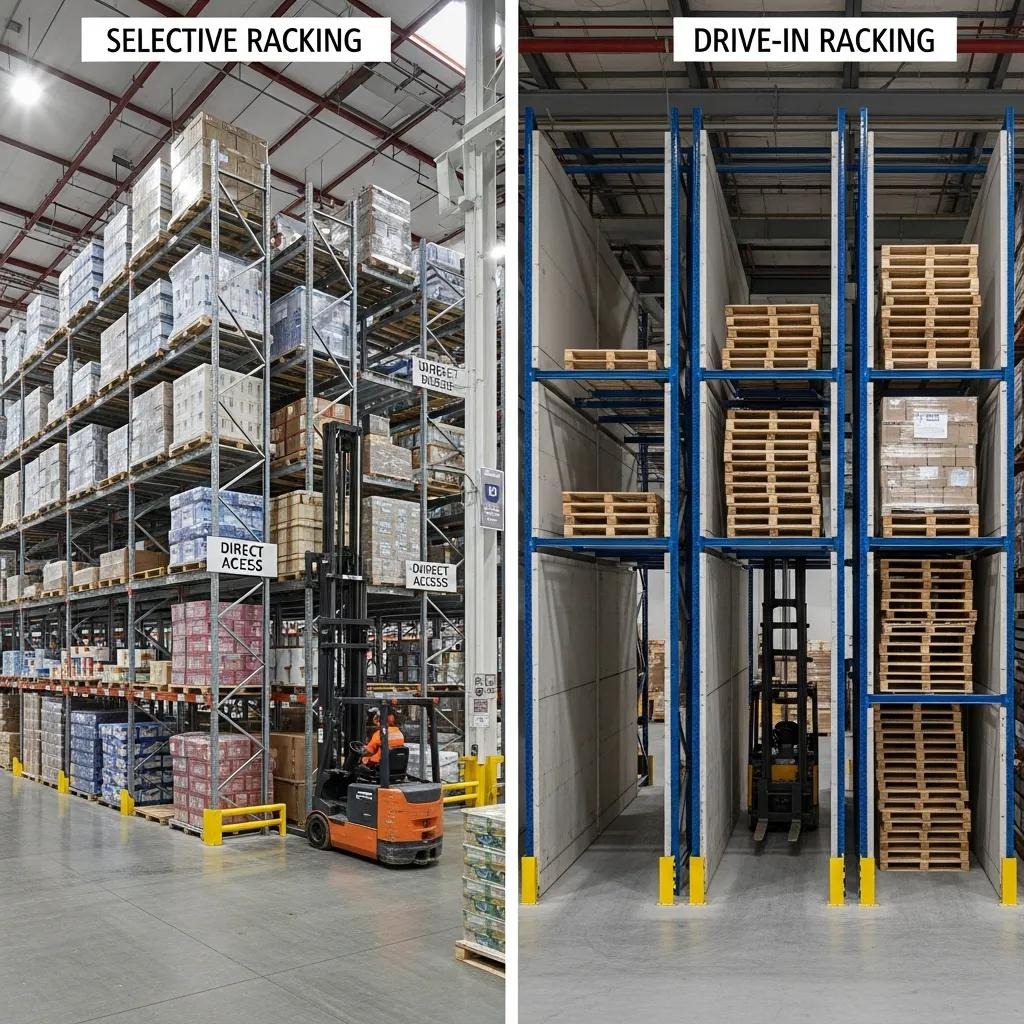
When choosing between selective and drive-in racking, weigh metrics like storage density, ease of access, and cost, both upfront and over time.

What Are the Differences in Storage Density, Accessibility, and Inventory Methods?
The trade-offs are clear: selective racking gives you high accessibility and supports FIFO workflows, making it suitable for a variety of products and quick stock movement. Drive-in delivers much higher storage density and favours LIFO, so it’s best when all your products are pretty much the same and your stock rotation works fine with LIFO.
How Do Initial and Operational Costs Vary Between Selective and Drive-In Racking?
Initial costs for both systems can be similar depending on configuration, though selective racking often requires more aisle space (affecting facility throughput). Operational costs depend on how your team handles picking and restocking. Drive-in can bump up handling time if access to deep pallets is frequent, while selective racking can keep things running smoothly for mixed stock.
When Should Businesses Choose Selective Pallet Racking or Drive-In Racking?
The right choice depends on product mix, turnover rate, and how much floor space you need to conserve versus how quickly you need to move stock.
Which Industries and Use Cases Best Suit Selective Racking Systems?
- E-commerce and Retail: Fast-moving, varied products that require quick picking and handling returns.
- Food & Beverage: A mix of pallet types and different rates of stock movement benefit from direct access and FIFO where needed.
- Manufacturing: Needing to get to components and finished goods often makes selective racking practical.
What Are Ideal Scenarios for Implementing Drive-In Racking Solutions?
- Bulk Storage Needs: Big volumes of the same product where density is the priority.
- Homogeneous Product Lines: Canned goods, bottled beverages, or other pallets that are all the same and move predictably.
- Cold Storage: When floor space is costly and deep storage cuts down on the space needed and the energy used per pallet.
What Are the Key Factors Influencing the Decision Between Selective and Drive-In Racking?
Consider inventory variety, turnover, building layout, budget, and plans for growth when making a decision.
How Do Inventory Characteristics and Turnover Rates Affect Racking Choice?
If you have high turnover and lots of different products, selective racking helps keep things agile. If turnover is low and your stock is all pretty much the same, drive-in racking can dramatically increase capacity. Match the racking style to how you pick and rotate stock.
What Role Do Facility Layout, Budget, and Scalability Play in Selection?
Facility footprint and aisle planning will determine how much density you can realistically achieve. Your budget is a big deal for the initial fit-out and ongoing labour costs. And don't forget scalability: pick systems you can tweak or combine as your product range shifts.
What Is Skyteck Online's Expert Recommendation for Choosing the Right Warehouse Racking System?
Skyteck Online advises starting with a needs assessment. Map out your products, turnover rates, and picking patterns before committing to a single solution.
How Does Skyteck Online Advise Balancing Storage Efficiency and Accessibility?
In many operations the best result is a hybrid approach: use selective racking for high-turn products that need fast access, and deploy drive-in bays for bulk reserves or slow-moving, uniform stock. This combination helps you maximise density without sacrificing the speed of day-to-day picking.
What Practical Tips Does Skyteck Offer for Optimising Warehouse Space Utilisation?
- Regular Inventory Audits: Review how fast your products are moving and storage needs every quarter to make sure your racking setup still matches what you need.
- Utilise Vertical Space: Stack safely to increase pallet positions without expanding the footprint. Just make sure your lift equipment and rack capacity match the height.
- Implement Efficient Layouts: Design aisles and pick paths to cut down on travel time for your most frequently moved items.